
When Love Hurts: Healing After Leaving an Addicted Spouse
There’s a moment after leaving a difficult marriage that I don’t think we talk about enough.
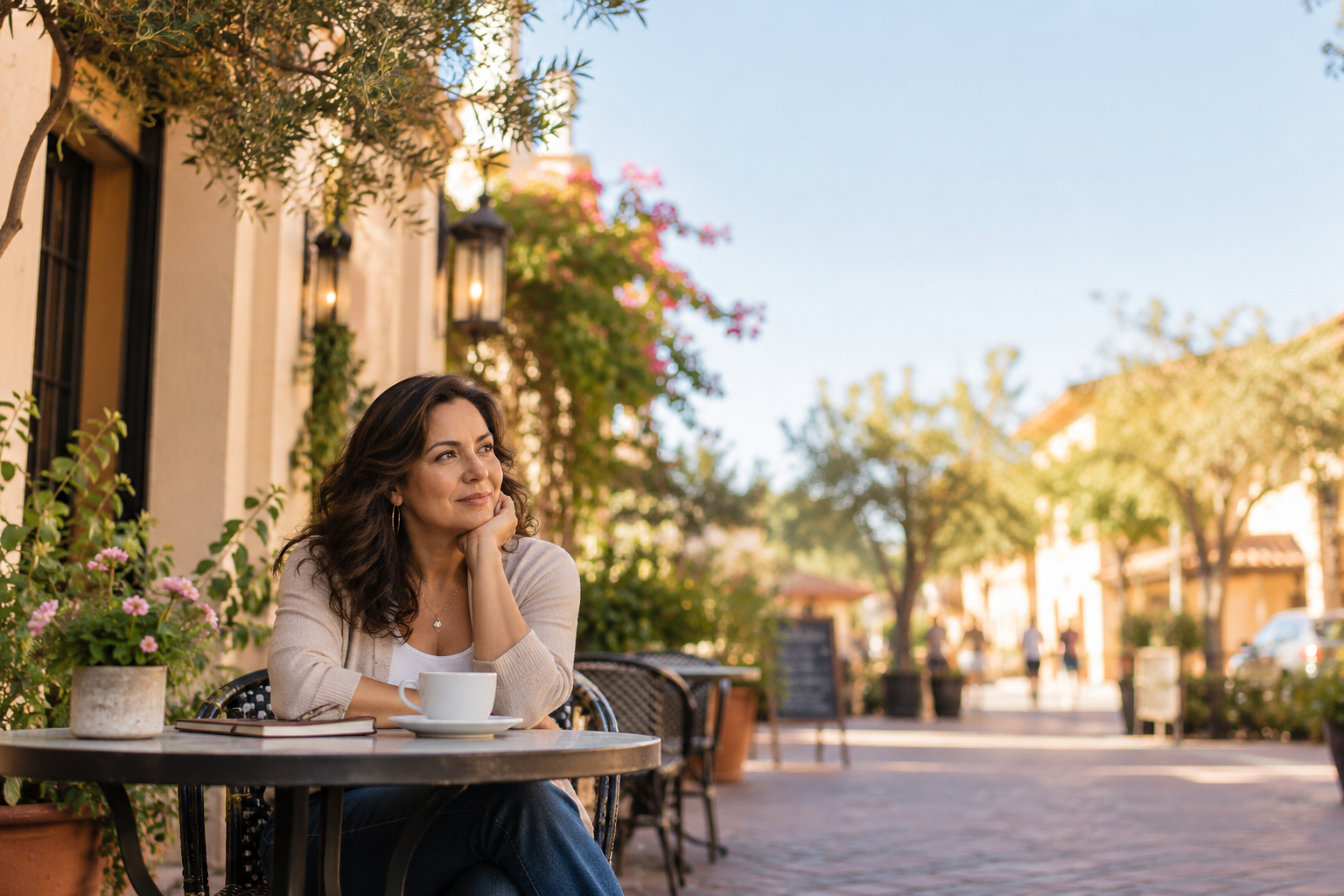
People imagine liberation. A fresh start. A woman standing in the sunlight like the final scene of a movie, glowing, triumphant, and suddenly fluent in Italian.
And perhaps that happens for someone.
My experience was a little different.
After years of living with someone else’s addiction, I had finally done something I’d spent a long time trying to find the courage to do. I left. I was no longer responsible for navigating the daily unpredictability, wondering what was true, anticipating the next problem, or trying to figure out how to keep everything from falling apart.
I expected relief, and there was relief. But there were other feelings too. Grief. Anger. Sadness about what I’d hoped our marriage could become. Questions about why I’d stayed as long as I had. And an unsettling realization that I had spent so much time paying attention to his life that I wasn’t entirely sure what to do with my own.
Leaving was supposed to be the part where everything got better.
Instead, I sometimes felt like I was standing in the rubble holding a first-aid kit, wondering, What on earth just happened to my life?
Why is leaving an addicted spouse so emotionally complicated?
Because you aren’t simply leaving a person. You’re also leaving a life you’ve spent years trying to hold together, along with the hopes, responsibilities, routines, and expectations that became part of it.
When addiction is part of a marriage, the relationship can become organized around unpredictability. You may spend enormous amounts of energy figuring out what’s happening, what’s being hidden, whether promises will be kept, and how to manage the consequences when they aren’t.
And somewhere in all of that, you may still love the person.
That’s one of the things that can be difficult to explain to someone who hasn’t experienced it. Love doesn’t necessarily disappear because trust has been damaged. You can recognize that a relationship is hurting you and still remember the person you loved, the good moments you shared, and the future you kept hoping might be possible.
I think we sometimes expect a woman to stop caring the moment she realizes she needs to leave. Human relationships rarely work that neatly.
For me, leaving meant acknowledging that the future I’d worked so hard to preserve wasn’t the future I was going to have. There was freedom in that decision, but there was grief too.
What is a trauma bond, and why can it be difficult to break?
The term trauma bond is often used to describe a strong emotional attachment that develops within a relationship involving harm, an imbalance of power, and recurring periods of distress and relief.
It’s important to distinguish that from simply loving someone who struggles with addiction. Addiction alone doesn’t establish that a trauma bond exists, and not every difficult relationship fits the definition.
But when a relationship includes repeated emotional harm, broken trust, frightening unpredictability, and periods of affection or reconciliation, the contrast between distress and relief can become powerful.
Imagine spending days wondering whether another promise will be broken. Then something changes. There’s an apology, a moment of tenderness, perhaps a renewed commitment to getting help. For a little while, you recognize the person you remember loving.
And you hope.
That hope can be difficult to surrender, particularly when you’ve invested years in the relationship and have seen glimpses of how different things might be.
Research on traumatic bonding has examined how intermittent mistreatment and unequal power can contribute to attachments that persist even after separation. It doesn’t explain every relationship, but it offers a useful way of understanding why leaving can be emotionally complicated even when a woman recognizes the harm she’s experienced.
What I find especially important is that understanding these patterns gives us a different question to consider.
Instead of asking, Why wasn’t I strong enough to leave sooner? we can begin wondering what made the relationship so difficult to untangle.
Those are very different conversations.
Why do capable, independent women stay in painful relationships?
This question bothered me for a long time because I was capable in so many other areas of my life.
I could work. Solve problems. Handle responsibilities. Make difficult decisions when something needed to get done. I wasn’t someone who generally sat around waiting for another person to figure things out for me.
Yet in my marriage, I kept trying.
I tried to understand. I tried to anticipate. I tried to help. I tried to make things better. And when something didn’t work, I often looked for another way to approach it.
The very qualities that served me well elsewhere could keep me deeply invested in solving something that wasn’t mine to solve.
I don’t think capable women necessarily stay because they’re incapable of recognizing a problem. Sometimes they recognize it very clearly. But they also remember the good days, feel responsible for the practical consequences, worry about the person they love, and struggle to let go of the future they’ve been trying to create.
There may also be financial concerns, safety issues, children, isolation, or other circumstances that make leaving genuinely difficult.
Looking back, I can see how much energy I spent trying to manage a situation I couldn’t control.
I had confused being responsible with being able to make everything turn out differently.
That’s a painful distinction to discover.
Why can you miss someone after leaving a relationship that hurt you?
Missing someone doesn’t necessarily mean leaving was a mistake.
You may miss the companionship, the familiar routines, the good moments, or the person you hoped your spouse would become. You may miss having someone to share ordinary parts of the day with, even if the relationship itself was far from peaceful.
And sometimes you miss the future you imagined more than the relationship you actually experienced.
That distinction took me time to understand.
Grief isn’t always a neat response to losing something wonderful. Sometimes we grieve something that was painful, disappointing, or never quite what we hoped it would be.
There can also be guilt. You may wonder how the other person is doing, whether you could have done more, or whether leaving made things worse for them.
If you’ve spent years monitoring another person’s well-being, that concern may continue long after the relationship ends.
I think that’s one reason the aftermath can feel so confusing. You can be relieved that the chaos is over and still feel sad. You can be certain you needed to leave and still have moments when you miss what was familiar.
Those feelings don’t have to agree with one another.
Why does the emotional chaos sometimes continue after leaving?
Living with prolonged unpredictability can shape what we pay attention to.
Research on chronic stress suggests that repeated exposure to stressful circumstances can influence the brain’s systems involved in responding to threats and adapting to the environment.
In everyday language, we can become very practiced at looking for signs that something might go wrong.
I knew how to notice a change in mood. I knew how to anticipate trouble. I knew how to think several steps ahead and prepare for possibilities that other people might never have considered.
Those habits had a purpose in the life I was living.
But after I left, I didn’t suddenly stop thinking that way.
There were moments when things were perfectly calm, yet I still felt uneasy. I had wanted peace for so long, and now that I had some, I didn’t always know how to settle into it.
The unfamiliarity of calm was something I hadn’t expected.
Understanding how chronic stress can affect our responses helped me make sense of that experience. It also helped me see that adjusting to a different environment might take time.
And while understanding the past mattered, I eventually became interested in something else.
What would happen when I no longer needed to organize so much of my attention around anticipating another person’s behavior?
What happens to your identity when you’ve spent years holding everything together?
This was where things became particularly interesting for me.
For years, I knew what needed my attention. There was always something to manage, anticipate, fix, or recover from. Even when I couldn’t control what was happening, I could find something useful to do.
Being responsible had become familiar.
Then the immediate demands changed, and I was left with time and choices that didn’t revolve around someone else’s addiction.
I could decide how I wanted to spend an evening. I could make plans without wondering whether they would be disrupted. I could consider what sounded enjoyable instead of what might keep everything steady.
You’d think that would be easy.
Sometimes it was wonderful. Other times, I found myself wondering what I actually liked, what I wanted to do, and what kind of life I wanted now.
I hadn’t stopped making decisions during my marriage. I’d made thousands of them.
I’d simply gotten out of practice making decisions that were primarily for me.
And I began to realize that rebuilding my life involved more than recovering from what had happened. It also meant getting acquainted with the woman who was going to live the life that came next.
How do you begin rebuilding your life after leaving an addicted spouse?
I wish I could tell you there was a moment when everything became clear.
There wasn’t.
What I remember is a gradual change in where I directed my attention.
For a long time, so many of my questions had revolved around someone else. What was happening? What did he need? What might go wrong? How could I keep things from getting worse?
Eventually, different questions began appearing.
What do I enjoy? Who do I want to spend time with? What kind of home feels good to me? What am I curious about? What have I been putting off? What would I choose if I weren’t constantly considering someone else’s reactions?
I didn’t have immediate answers to all of them.
But I began paying attention.
Research on self-efficacy suggests that our confidence in our ability to act develops partly through experience. We try something, handle what follows, and gradually build evidence that we can make decisions and respond to their outcomes.
That fits my experience. I didn’t rebuild confidence by waiting until I felt certain about everything. I began trusting myself more as I made ordinary choices, learned from them, and discovered that I could handle not getting every decision perfectly right.
I also think there’s a place for professional support, particularly when a relationship has involved abuse, trauma, or ongoing distress. Understanding what happened and having appropriate support can be important parts of recovery.
But alongside that work, I found myself becoming interested in life again.
Not all at once, and not through some dramatic reinvention.
More through small moments of curiosity and the realization that I was allowed to have preferences, make plans, and want things simply because they mattered to me.
What if you still don’t know what you want your life to look like?
I think there’s a temptation after leaving a painful relationship to believe you should immediately know what comes next.
You’ve made the difficult decision. You’ve gotten through so much. Surely now you’re supposed to create an exciting new life, find your purpose, and become the woman you were always meant to be.
That’s a lot to ask of someone who may still be figuring out what she wants for dinner.
I didn’t emerge from my marriage with a beautifully organized plan for the rest of my life. I had practical things to handle, emotions to work through, and a lot to discover about myself.
What changed over time was my relationship with the questions.
I became less interested in figuring out who I was supposed to become and more interested in noticing who I was when I wasn’t constantly responding to someone else’s needs.
What caught my attention? What felt good? What did I want more of? What no longer fit?
Those questions gave me room to experiment without demanding that every choice become a major life decision.
And gradually, I began to see a future that wasn’t defined entirely by the marriage I’d left.
There were things I wanted to experience. Things I wanted to create. Parts of life I was genuinely curious about.
I think that’s what surprised me most.
For so long, I’d been focused on getting out of a life I no longer wanted.
Eventually, I became interested in creating one I actually did.
If you’re wondering where to begin
After spending years trying to manage someone else’s chaos, figuring out what you want can feel surprisingly unfamiliar. You may have more freedom now, but that doesn’t mean you automatically know what to do with it.
A Place to Start is a free resource I created for that moment. It’s a way to begin noticing your own preferences, curiosities, and wants without needing to have your entire future figured out.
References
Dutton, D. G., & Painter, S. (1993). Emotional attachments in abusive relationships: A test of traumatic bonding theory. Violence and Victims, 8(2), 105–120.
McEwen, B. S. (2007). Physiology and neurobiology of stress and adaptation: Central role of the brain. Physiological Reviews, 87(3), 873–904.
Bandura, A. (1997). Self-Efficacy: The Exercise of Control. W. H. Freeman.